
New publications
Preparations
Febichol
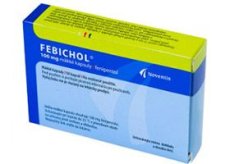
The active ingredient of this drug is produced from the rhizomes of turmeric (phenipentol) and has the ability
Activate:
- the process of secreting bile and the concentration of bile acids in it,
- conversion of inactive pancreatic prolipases into active enzymes that catalyze the breakdown of lipids previously emulsified by hepatic bile.
In addition, the drug stimulates the production of gastric mucus.
ATC classification
Indications Febichola
The drug is used for the following chronic secretory disorders of the digestive organs:
- violation of the exocrine function of the liver and pancreas;
- dysfunctions of the biliary tract and its anomalies, accompanied by stagnation of bile;
- cholecystitis, cholangitis and their combined form;
- postcholecystectomy syndrome;
- motor-tonic dysfunction of the gallbladder, ducts and sphincters;
- hypoacid gastritis;
- dyspeptic manifestations.
Release form
Capsules containing 100 mg of phenipentol, as well as auxiliary substances: 85% glycerin, dietary supplement - chlorophyllin (eucalyptus leaf extract, fructose, ascorbic acid), preservative and antiseptic - methylparaben, gelatin.
Pharmacodynamics
The active ingredient of Febichol has a choleretic effect, increasing the concentration of dense components in it - cholesterol and bile acids, which, in turn, increase the enzymatic activity of pancreatic lipase. This helps to normalize the breakdown and absorption of fats that enter the digestive tract with food. The drug acts by increasing the level of the peptide hormone secretin in the blood. At the same time, the production and volume of pancreatic juice increases, as well as the content of bicarbonates and active lipases in it.
In addition, phenylpentol binds free radicals in liver tissue, thereby blocking the process of oxidative degradation of lipids and protecting hepatocytes from damage.
The active ingredient activates the gastric glands, increasing the production of gastric mucus (mucin), which coats and protects the gastric mucosa.
It also exhibits moderate preventive activity against the formation of stones in the gallbladder and ducts, reducing the absolute quantitative indicator of cholesterol content in bile.
Pharmacokinetics
The maximum effect of phenylpentol is achieved a quarter of an hour after administration. The main part of the drug is broken down by the liver and enters the portal circulation. It is concentrated insignificantly in tissue cells. Up to 35% of the active ingredient is excreted in the urine as a metabolite, and less than 1% unchanged in the same way.
Dosing and administration
The drug is dosed in two capsules, the frequency of administration is prescribed by the doctor. It varies from a single dose of two capsules to three doses per day of the same single dose. The capsules are swallowed whole and washed down with a glass of water to prevent them from sticking in the esophagus. The standard duration of treatment is three weeks.
 [ 2 ]
[ 2 ]
Use Febichola during pregnancy
Not recommended for use by pregnant and lactating women.
Contraindications
It is not prescribed to patients aged 0-14 years, pregnant women and nursing mothers, as well as in acute forms of inflammatory diseases of the liver, pancreas and gallbladder and their complications, such as empyema of the gallbladder, obstruction of the biliary tract.
[ 1 ]
Side effects Febichola
The drug is well tolerated, however, in rare cases, skin allergic reactions, heaviness in the epigastrium, bloating, heartburn, and nausea may be observed.
Overdose
Not recorded.
Storage conditions
Store at temperatures between 10℃ and 25℃. Keep out of reach of children.
[ 5 ]
Shelf life
3 years.