
New publications
Preparations
Isofra
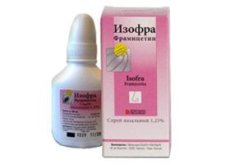
Isofra is a medicine for local use. It is used to eliminate ENT diseases and has powerful antimicrobial properties.
ATC classification
Indications Isofra
It is indicated for the complex treatment of rhinitis, sinusitis, and nasopharyngitis of bacterial origin (if there is no damage to the walls of the nasal sinuses).
The drug is sometimes prescribed to prevent the development of postoperative infectious processes caused by bacteria.
 [ 1 ]
[ 1 ]
Release form
It is available as a spray in 15 ml bottles. The package contains 1 bottle, which also comes with a spray nozzle.
Pharmacodynamics
The active substance of the drug is framycetin, which is included in the category of aminoglycosides for local use and has antimicrobial properties. It has high medicinal indicators inside the tissues of the nasal mucosa, as well as the paranasal sinuses. The substance has a pronounced bactericidal activity, affecting most strains of gram-negative, as well as gram-positive microbes that provoke the development of infectious processes in the upper respiratory tract. Resistance to framycetin is almost not observed.
Framycetin is active against Corynebacterium, Listeria monocytogenes, Staphylococcus meti-S, Acinetobacter (mainly Acinetobacter baumannii), Moraxella catarrhalis, Campylobacter, Citrobacter freundii, Citrobacter koseri. In addition, also against Enterobacter aerogenes, Enterobacter cloacae, Escherichia coli, Influenza bacillus, Klebsiella, Morgan bacteria, Providencia rettgerii Proteus mirabilis, Proteus vulgaris, Salmonella, Serratia, as well as Shigella and Yersinia.
Pasteurella are moderately sensitive to the effects of framycetin.
The following microorganisms are resistant to the effect of the substance: enterococci, Nocardia asteroides, staphylococci meti-R (resistance is approximately 30-50%, more pronounced hospital), streptococci and Alcaligenes denitrificans. In addition to them, also Burkholderia, Flavobacterium sp., Providence Stuart, Pseudomonas aeruginosa, Stenotrophomonas maltophilia, chlamydia, resistant anaerobes, and along with them mycoplasma and rickettsia.
Dosing and administration
The medicine is administered intranasally. Before using the spray, you need to press the nozzle several times and spray a little of the drug - this is necessary to obtain the correct dosage. The procedure for spraying the medicine should be performed with your head slightly tilted forward. The duration of the therapeutic course, as well as the dosage, are prescribed by the attending physician.
The adult dosage is 1 spray into each nostril 4-6 times a day.
Children's dosage: 1 spray into each nostril three times a day.
It is recommended that the duration of the therapeutic course be 10 days.
If after the first week of treatment there is no improvement in the patient’s condition, the spray should be discontinued.
[ 2 ]
Use Isofra during pregnancy
Poisoning effects on the function of the cochleovestibular apparatus of the fetus may develop. The substance may also penetrate systemically through the mucous membrane.
The safety of using the drug during pregnancy, as well as its effectiveness during this period, have not been studied in sufficient quantities, which is why it is not recommended to prescribe it during pregnancy.
The drug should not be prescribed during lactation, because aminoglycosides can pass into breast milk.
Contraindications
Among the main contraindications of the drug:
- the patient has hypersensitivity to framycetin or other elements from the aminoglycoside category;
- should not be administered to children under 1 year of age.
The spray should not be used as a nasal sinus rinse.
Side effects Isofra
Isofra is generally well tolerated. Only occasionally after using the spray, local or systemic allergic reactions (itching or urticaria) developed.
Storage conditions
The spray should be kept out of the reach of small children. Temperature – maximum 25°C.
Shelf life
Isofra can be used for 3 years from the date of manufacture of the drug.